

.jpg)
A baby or child bicycle seat should be chosen primarily by your child’s weight, size and development
As a simple guide, front-mounted child seats commonly carry children up to around 15 kg, standard rear child seats up to 22 kg, while specially designed junior bicycle seats can carry older children up to 35 kg. Urban Iki, for example, recommends its front seats from around 9 months to 3 years, rear seats from around 9 months to 6 years, and Junior seats from 5 to 10 years.
That means cycling together does not necessarily have to stop when your child turns five.
When Can a Baby Use a Bicycle Seat?
A baby should only use an upright bicycle child seat once they can sit independently and support themselves properly.
For many children this is around nine months, but development differs from child to child. Urban Iki, for example, states that its front seat can be used once a child can sit independently, typically from around nine months.
Always check the instructions and minimum requirements of the specific seat rather than relying only on age.
Around 9 Months to 3 Years: Front Bike Seats Up to 15 kg
A front-mounted baby bicycle seat can be practical for younger children because the child sits between the rider’s arms and remains easy to see.
A typical maximum weight is around 15 kg. Urban Iki specifies up to 15 kg and 93 cm for its front seat range.
bFlex also currently offers the Light F front child seat, which has a maximum load of 15 kg. bFlex
Front seats are particularly useful for shorter rides, but always make sure there is enough room to steer, pedal and get safely on and off the bicycle.
Around 9 Months to 5–6 Years: Rear Child Bike Seats Up to 22 kg
As a child becomes heavier, a rear-mounted bicycle seat is usually the more practical option.
Standard rear child seats commonly support a maximum child weight of 22 kg. The current European EN 14344 standard covers child bicycle seats intended for children weighing from 9 kg up to 22 kg who can sit unaided.
Age is only an indication. A four-year-old weighing 17 kg and a four-year-old weighing 23 kg obviously need different solutions.
This is why you should always check the actual maximum permitted weight.
5 to 10 Years: Junior Bike Seats Up to 35 kg
What happens when your child becomes too big for a standard 22 kg rear bicycle seat?
This is where a junior bike seat becomes useful.
The Urban Iki Junior bike seat, our best-selling choice for older children, is designed for approximately 5 to 10 years old with a maximum child weight of 35 kg.
It is particularly useful for school runs, commuting with children or longer family rides where a child may already be able to cycle independently but cannot comfortably cover the entire distance.
Urban Iki includes:
- Maximum child weight of 35 kg
- Recommended age of approximately 5–10 years
- Ergonomic rear seat
- Adjustable footrests
- Hip belt
- Folding backrest
- Integrated lock
- Compatibility with many regular bicycles and e-bikes
The Junior mounts to the luggage carrier rather than the standard Urban Iki frame bracket, because that frame bracket is designed only for loads up to 22 kg.
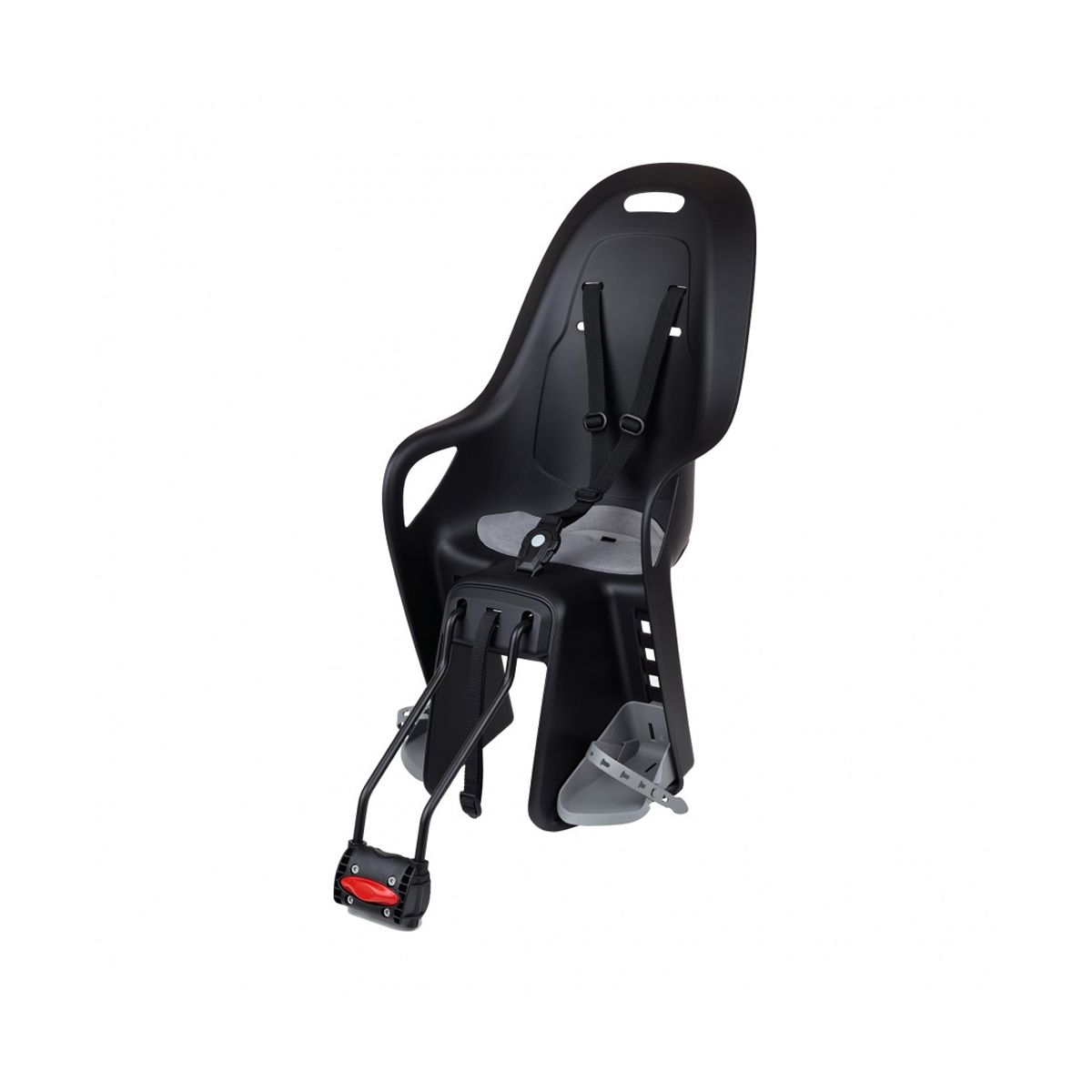
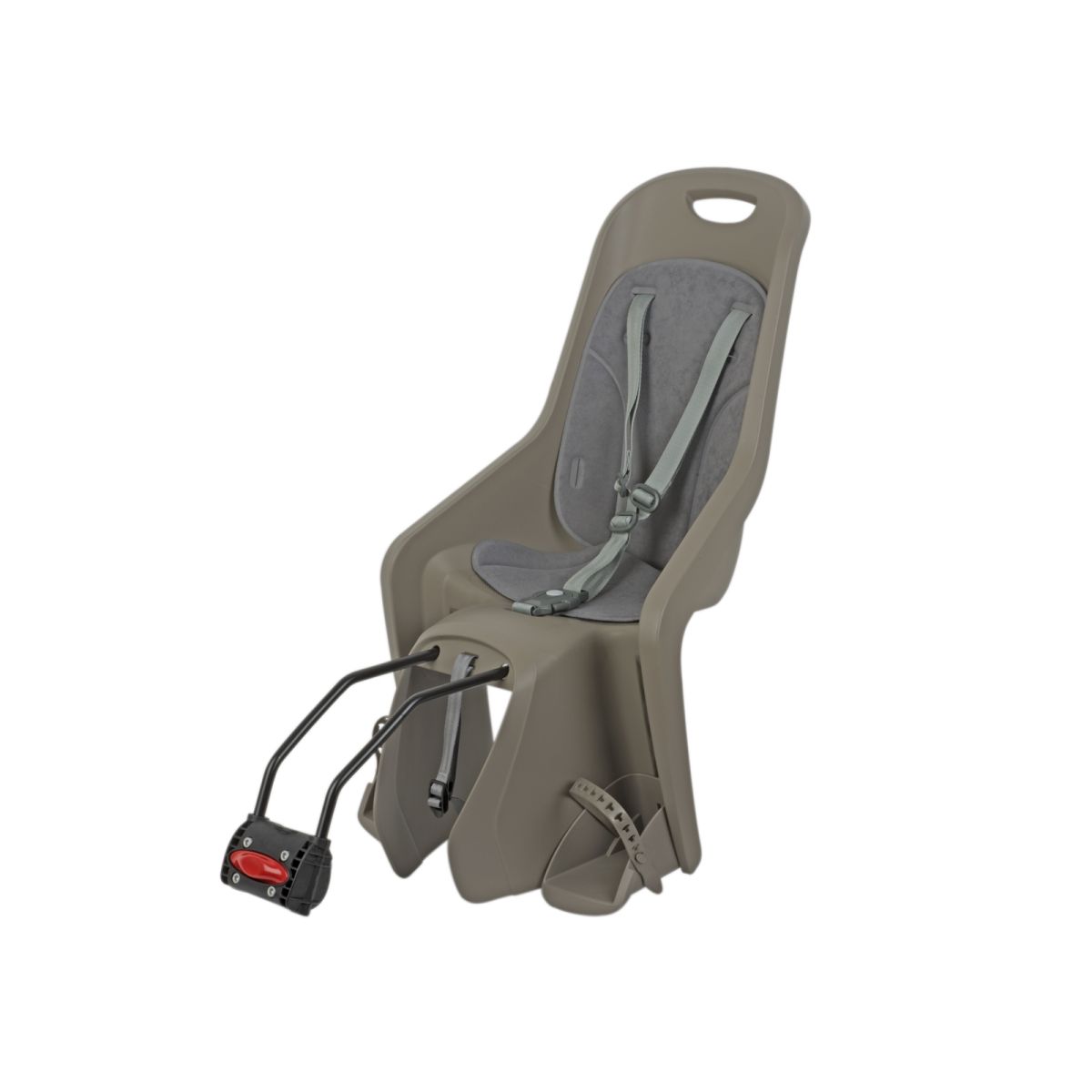
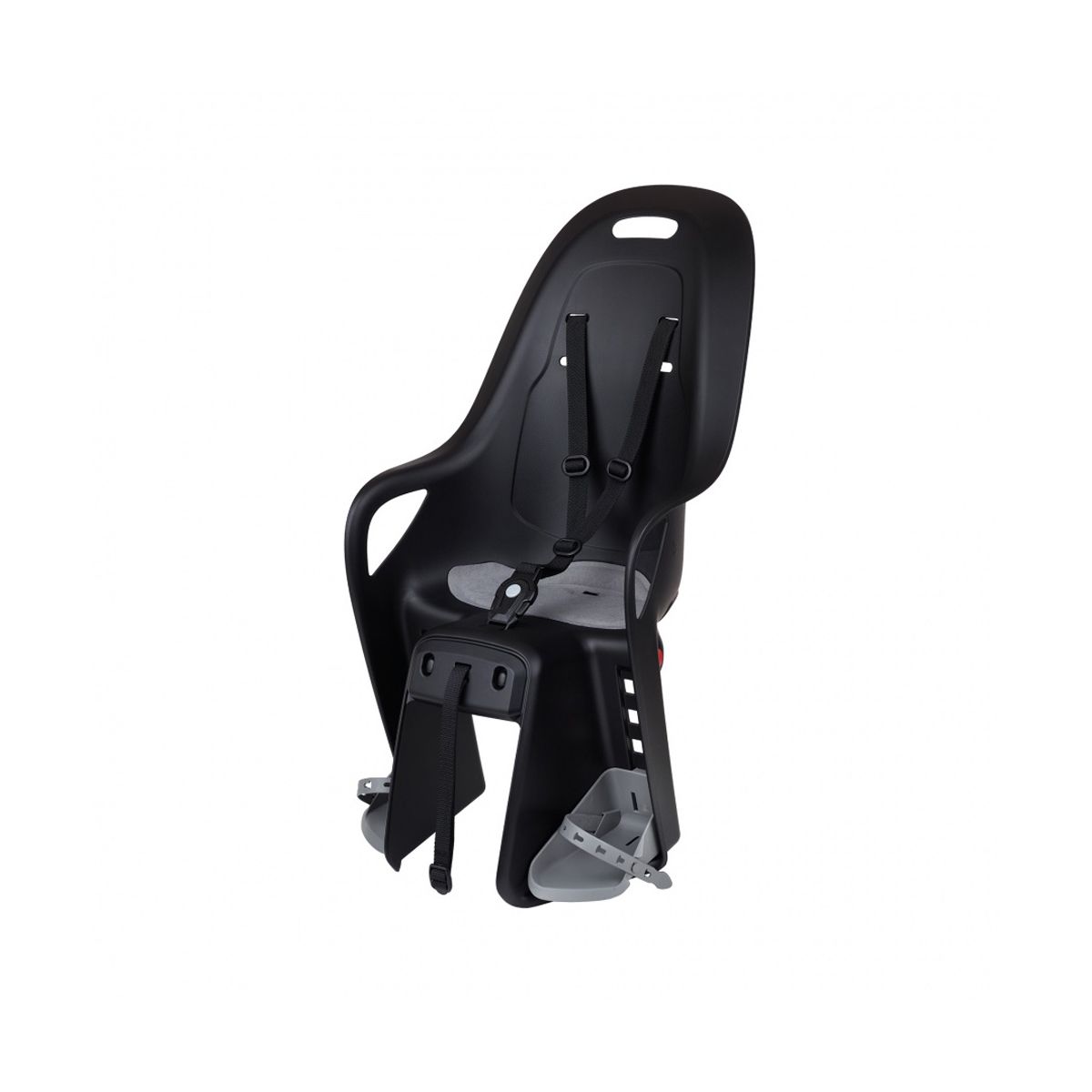
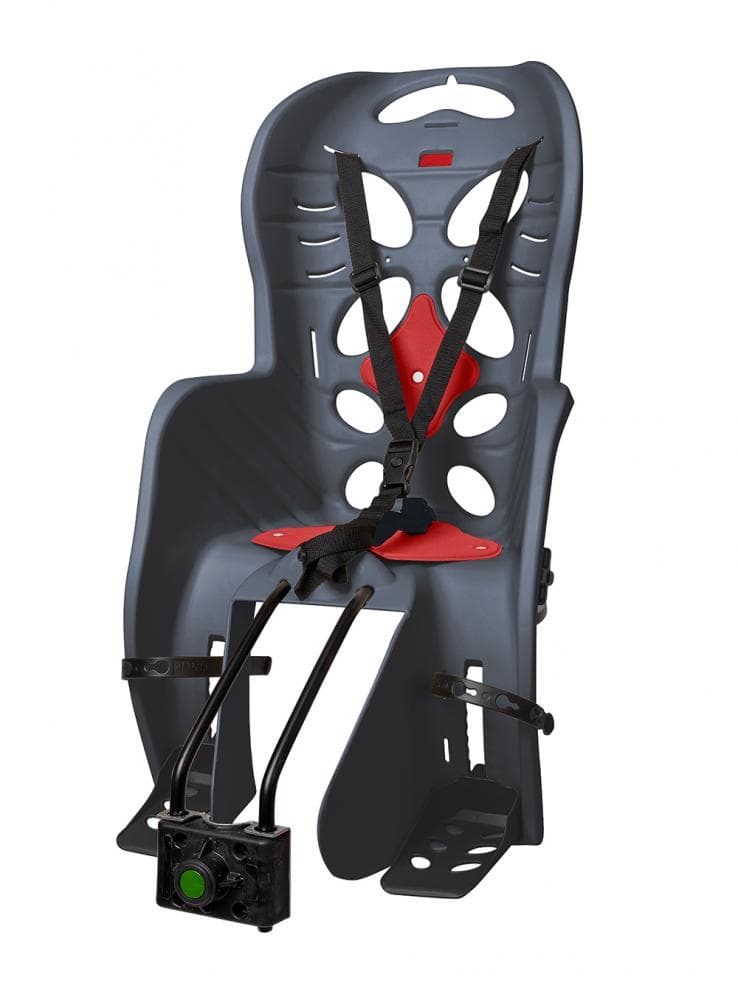
.jpg)
What Should You Check Before Buying a Child Bike Seat?
1. Check the Child's Weight — Not Only Their Age
This is the most important starting point.
A seat may be described as suitable for a five-year-old, but the child must still remain below the stated maximum weight.
Never exceed the manufacturer's weight limit.
2. Check How the Seat Mounts to the Bicycle
Child seats can attach in several different ways:
- Front/stem mounting
- Bicycle frame mounting
- Rear luggage rack mounting
- Dedicated rack systems such as MIK HD or AVS+
Not every child seat fits every bicycle.
This is particularly important with electric bikes because batteries, oversized frame tubes and integrated rear racks can affect compatibility.
3. Check the Maximum Load of the Rear Rack
A seat capable of carrying a 35 kg child does not automatically mean that every bicycle luggage rack can carry that load.
Check both the bike manufacturer's and seat manufacturer's specifications.
This is especially important with junior bicycle seats.
4. Look for a Proper Harness or Safety Belt
Young children normally require a full restraint system. As children become older, the restraint design can differ.
For example, the Urban Iki Junior uses a hip belt, whereas conventional child seats commonly use multi-point harnesses.
5. Protect Feet From the Wheel
Proper footrests, straps and wheel protection are important.
Children should never be able to accidentally move their feet into the rear wheel or spokes while cycling.
6. Check Whether the Footrests Are Adjustable
Children grow quickly. Adjustable footrests make it possible to maintain a comfortable and secure seating position for longer.
7. Consider the Extra Weight When Riding
Adding a child changes the bicycle's centre of gravity.
Allow more distance for braking, take corners smoothly and be especially careful when stopping, starting or parking the bicycle.
8. Use a Properly Fitting Helmet
Both the adult and child should use suitable protective equipment and follow the bicycle and child-transport rules that apply in their country.
Child Bike Seats Available on bFlex
The bFlex Kids & Passenger Accessories collection currently includes 16 products, with front, rear, frame-mounted, rack-mounted and junior solutions. bFlex
Here are some of the main options.
Urban Iki Junior Bike Seat — Best Seller for Ages 5–10
For older children, the Urban Iki Junior stands out because of its unusually high 35 kg maximum child weight.
It is designed for children approximately 5–10 years old and combines a compact ergonomic seat with a hip belt, adjustable footrests, folding backrest and integrated lock.
It is a particularly interesting option for e-bike owners and parents who regularly take older children to school or around the city.
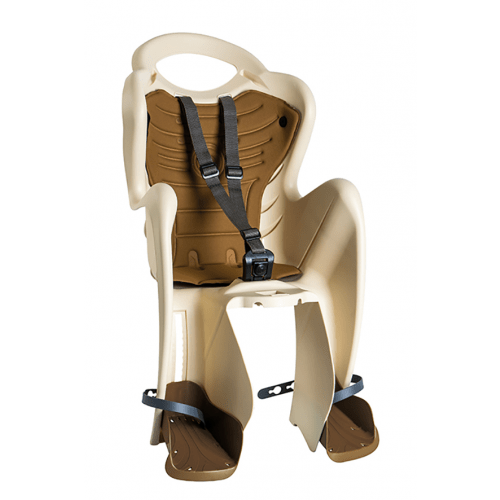
Bellelli B-ONE Clamp — Rear Seat Up to 22 kg
The Bellelli B-ONE Clamp is a rear luggage-rack-mounted child seat with a maximum load of 22 kg.
It includes adjustable safety belts, padded belt sections, child-resistant safety locks and adjustable footrests with straps. The model listed on bFlex is made in Italy and is stated as TÜV, GS and EN 14344 certified. bFlex
It is a practical option for the traditional baby-to-young-child rear-seat stage.
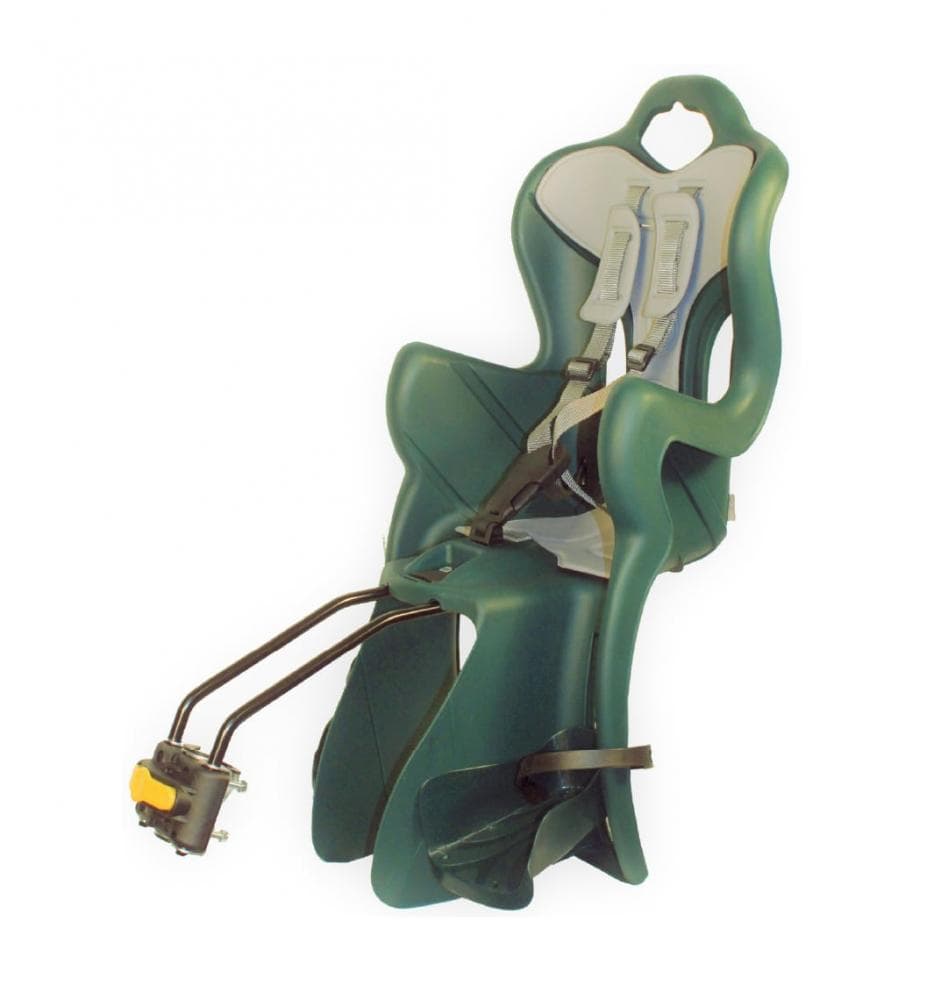
Light B Baby Seat — Frame Mounted Up to 22 kg
The Light B baby seat by Bellelli mounts directly to the bicycle's seat tube rather than requiring a rear luggage rack.
It supports up to 22 kg and includes a three-point harness, adjustable footrests and a suspended mounting bracket that helps absorb road shocks.
Its universal mounting system supports round seat tubes from 25–46 mm and oval tubes from 30–60 mm. bFlex
This can be useful for bicycles that do not already have a suitable rear rack.
Thule Yepp Nexxt Maxi — Premium Rear Child Seat Up to 22 kg
The Thule Yepp Nexxt Maxi is another rear-seat option with a 22 kg maximum child weight.
Thule specifies a maximum child height of 110 cm and equips the seat with an adjustable padded five-point harness, adjustable footrests and foot straps, shock-absorbing construction and water-repellent materials.
bFlex currently lists the Yepp Nexxt Maxi within its Kids & Passenger Accessories range. bFlex
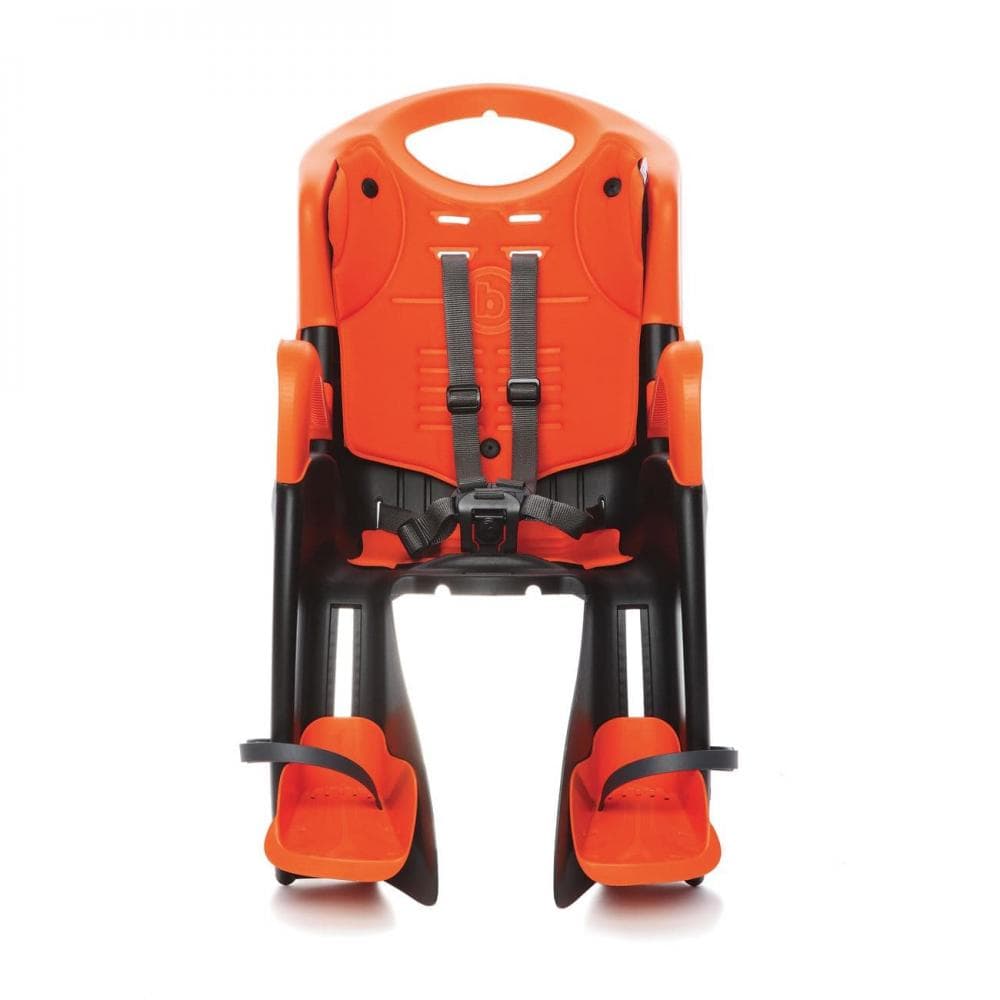
Light F Front Child Seat — Up to 15 kg
For smaller children, the Light F provides a front-mounted option with a maximum permitted load of 15 kg. bFlex
This type of bicycle seat is generally intended for the earlier child-seat stage before moving to a larger rear-mounted seat.
Front, Rear or Junior Bike Seat: Which Should You Choose?
For a young child who can already sit independently and remains below approximately 15 kg, a front seat can be convenient.
As the child becomes heavier, a rear child seat rated for up to 22 kg usually provides more room.
Once the child reaches roughly five years old or outgrows the 22 kg category, a purpose-built junior seat can allow you to continue cycling together. The Urban Iki Junior extends that range to 10 years and 35 kg.
The important point is simple:
Choose by development, weight, bicycle compatibility and the seat manufacturer's limits — not age alone.
Check out all kids and baby seats
FAQ
What age can a baby go in a bicycle seat?
The child should first be able to sit independently. Many manufacturers indicate approximately nine months as a starting point, but development and the instructions for the specific seat matter more than age alone.
What is the maximum weight for a baby bicycle seat?
It depends on the seat. Front seats are commonly limited to around 15 kg, while conventional rear seats commonly support up to 22 kg.
Can a 5-year-old use a bicycle child seat?
Yes, provided the seat is designed for the child's weight and size. A conventional rear seat may still be suitable below 22 kg, while junior seats such as the Urban Iki Junior are specifically designed for approximately 5–10 years and up to 35 kg.
What bicycle seat is suitable for a 6-, 7- or 8-year-old?
For older children who have outgrown conventional 22 kg rear seats, look for a dedicated junior bicycle seat. The Urban Iki Junior is designed for approximately 5–10 years and up to 35 kg.
Can you put a child seat on an electric bike?
Often yes, but compatibility must be checked. Rear batteries, integrated luggage racks and unusual frame shapes can affect mounting. Urban Iki specifically states that its bicycle seats can be used with e-bikes when the appropriate mounting system is used.
Is age or weight more important when choosing a child bike seat?
Weight, physical development and proper fit are more important than the age printed on the box. Age ranges should be treated as guidance.
Can a bicycle child seat hold 35 kg?
Standard child seats normally stop at 22 kg. Dedicated junior seats can support more. The Urban Iki Junior has a stated maximum child weight of 35 kg.