

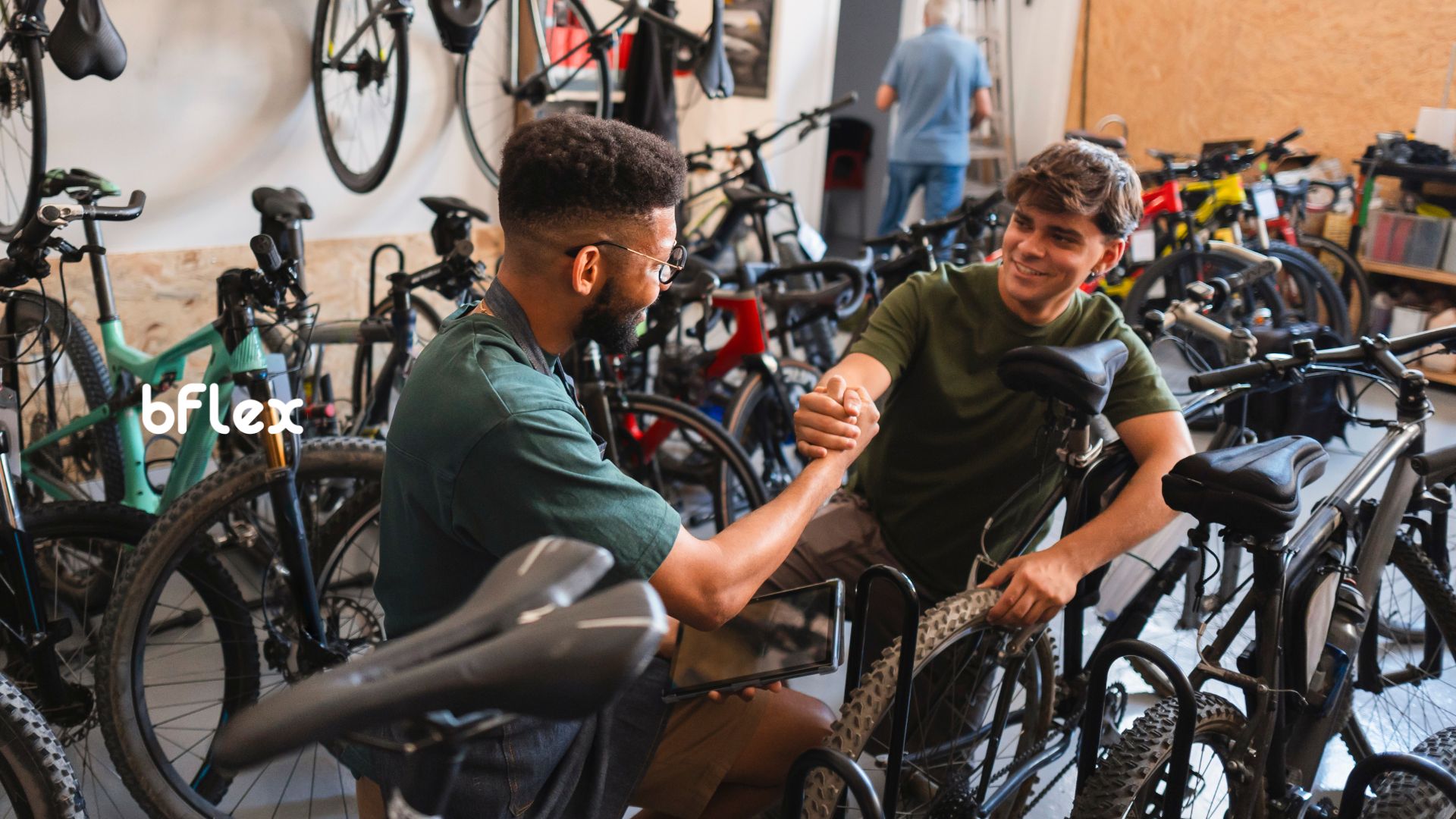
How Bike Shops Can Earn More from the Same Fleet
For many bike shops, revenue is still built around one main activity: selling bikes. Some shops also rent out part of their fleet during tourist season, while others offer repairs, accessories or guided rides. But in most cases, the same bicycles are not used to their full commercial potential.
A bike sitting in the shop is not only inventory. It can become a rental product, a monthly lease, a rent-to-buy option, a secondhand sale, or part of a guided experience. The challenge is not always having more bikes. Often, the real opportunity is earning more from the bikes you already have.
This is where a multi-revenue-stream strategy becomes powerful.
The problem with relying on one revenue stream
Traditional bike shops often face the same challenges:
Seasonal demand, especially in tourist areas.
High inventory costs, because bikes take up space and capital.
Slow-moving stock, especially for premium bikes and e-bikes.
Limited online visibility outside their local customer base.
Unpredictable cash flow, especially outside peak months.
At the same time, customer behavior has changed. Some people want to rent a bike for one day. Others want to lease an e-bike for a few months. Some want to test a bike before buying it. Tourists want easy online booking. Locals want flexible ownership options.
A single bike can serve several of these customers, as long as the shop has the right system in place.
One bike, multiple ways to earn
The strongest bike shops are no longer thinking only in terms of “sell or don’t sell”. They are thinking in terms of lifecycle revenue.
A city e-bike, for example, can generate income in different ways:
It can be rented daily to tourists.
It can be leased monthly to locals or expats.
It can be offered as a rent-to-buy product.
It can later be sold secondhand.
It can be used in guided tours or partner packages.
Instead of waiting for one customer to buy the bike, the shop can generate revenue from the same asset over time.
This is especially relevant for e-bikes, cargo bikes, premium city bikes and trekking bikes, where the purchase price can be a barrier for customers. Flexible access gives customers a lower-friction way to start riding, while giving the shop more opportunities to monetize the bike.
Daily rentals: monetize tourist and short-term demand
Daily rentals are often the easiest additional revenue stream for bike shops in tourist destinations. Visitors may not want to buy or lease a bike, but they are willing to pay for a convenient ride during their stay.
This works especially well for:
City bikes
E-bikes
Mountain bikes
Trekking bikes
Kids’ bikes
Cargo bikes
Scooters or other light electric vehicles
The key is visibility. Tourists usually search online before or during their trip. If your shop is not easy to find and book online, you may lose the customer before they ever walk past your store.
By listing bikes online through a marketplace like bFlex, shops can make their fleet discoverable to people actively searching for rentals in their area.
Monthly leasing: create recurring revenue
Leasing is one of the most attractive revenue streams for bike shops because it creates predictable monthly income.
Instead of selling one bike once, the shop can offer flexible access to people who need a bike for a longer period but do not want to buy immediately.
This can be ideal for:
Students
Expats
Remote workers
Delivery riders
Local commuters
Seasonal workers
People testing an e-bike before buying
Monthly leasing also helps shops reach customers who may not have the budget or confidence to make a full purchase upfront. Over time, leasing can become a path to purchase, especially if the customer becomes attached to the bike.
Rent-to-buy: turn hesitation into conversion
Many customers are interested in e-bikes but hesitate because of the upfront cost. Rent-to-buy reduces that barrier.
Instead of asking the customer to pay the full amount immediately, the shop can offer a structure where the customer starts using the bike and pays over time. This creates a smoother path from interest to ownership.
For bike shops, rent-to-buy can help move inventory faster while still generating value from the bike. It can also reduce the need for heavy discounting, because the customer is buying flexibility and convenience, not only the bike itself.
Secondhand sales: extend the value of each bike
A bike does not lose its commercial value after being rented or leased. If maintained properly, it can later be sold as a secondhand product.
This creates a full lifecycle model:
First, the bike earns money through rentals or leasing.
Then, it is sold secondhand.
Finally, the shop can reinvest in newer inventory.
This model is especially useful for shops that want to keep their fleet fresh without letting older bikes sit unused.
It also serves a growing customer group looking for more affordable and sustainable ways to buy a bike.
Guided tours and experiences
For some bike shops, the biggest opportunity is not only renting the bike, but packaging the bike into an experience.
A guided bike tour can generate more value than a simple rental because the customer is paying for the route, local knowledge, convenience and support.
This works well in:
Historic city centers
Coastal areas
Wine regions
Mountain destinations
Islands
Tourist villages
Nature routes
Even if the shop does not run tours directly, it can partner with local guides, hotels or travel operators. The same fleet can support both rentals and experiences, depending on the season and customer demand.
Why online booking matters
Having multiple revenue streams is difficult without a proper online booking system.
If everything is managed manually through phone calls, WhatsApp messages, spreadsheets or walk-ins, the shop quickly reaches a limit. Availability becomes unclear. Prices are harder to manage. Customers drop off because they cannot book instantly.
Online booking helps bike shops:
Show real-time availability
Accept bookings outside opening hours
Reach customers before they arrive
Reduce manual admin
Present bikes professionally
Offer different services for the same bike
Build trust with clear product pages and pricing
This is where bFlex helps vendors turn their fleet into a more flexible and profitable asset.
How bFlex helps bike shops earn more
bFlex is a marketplace for bike rentals, leasing, sales and guided tours. For bike shops, this means one platform can support several ways of earning from the same fleet.
With bFlex, vendors can list their bikes and make them available for different services, depending on their business model.
A bike can be offered for daily rental, monthly lease or sale. Vendors can also list guided tours and other mobility experiences. This gives shops more flexibility and allows them to reach different customer groups without building their own marketplace or booking system.
For bike shops, the benefits include:
More online exposure
Access to customers searching for rentals, leasing and bike purchases
The ability to monetize bikes across multiple revenue streams
Reduced dependency on walk-in traffic
Better visibility during both high and low season
A more professional online presence
Instead of waiting for customers to discover the shop locally, bFlex helps bring the shop’s fleet to customers who are already looking for flexible mobility options.
A practical example
Imagine a bike shop with 20 e-bikes.
In a traditional model, the shop may try to sell them one by one. Some bikes sell quickly, while others remain in stock for months.
In a multi-revenue model, those same 20 e-bikes can work harder:
A few are available for daily tourist rentals.
Some are offered as monthly leases to locals.
A selection is available through rent-to-buy.
Older models are listed as secondhand bikes.
A few are used for guided tours or hotel partnerships.
The result is a more dynamic business model. The shop is no longer dependent on one type of customer or one moment of purchase. The fleet becomes a flexible revenue engine.
Why this matters for smaller bike shops
Large mobility platforms often focus on scale, but local bike shops have something valuable: local knowledge, service capability and trusted customer relationships.
The problem is that many smaller shops do not have the time or resources to build advanced digital tools.
bFlex gives bike shops a way to compete online without losing their local identity. The shop keeps control of its fleet, while gaining access to a broader marketplace and better digital infrastructure.
This is especially important as customers increasingly expect to compare options, check availability and book online before making a decision.
The future of bike shop revenue is flexible
Bike shops that rely only on one revenue stream may find it harder to deal with seasonality, rising inventory costs and changing customer expectations.
The shops that grow will be the ones that use their fleet more intelligently.
That means combining:
Rentals for short-term users
Leasing for recurring revenue
Rent-to-buy for flexible ownership
Sales for direct conversion
Secondhand sales for lifecycle value
Tours for higher-value experiences
The same bike can serve different customers at different stages of its life. With the right platform, that bike can generate revenue again and again.
Turn your fleet into more than inventory
Your fleet should not sit still. Every bike in your shop has the potential to earn more, reach more customers and support more services.
Whether you run a bike shop, rental company, tour business or mobility store, bFlex helps you turn your fleet into a multi-revenue-stream business.
Become a bFlex vendor and start earning more from the same fleet:
https://bflex.io/partners/vendor