

.jpg)
Can You Start a Bike Rental Business With Only 4 or 5 Bikes?
Thinking about starting a bike rental business and wondering how many bikes you actually need?
The short answer: you can start with as few as 4 bikes.
You do not need a fleet of 20, 30 or 50 bicycles before accepting your first booking. In fact, starting smaller can often be the smarter approach because it allows you to test demand, understand your customers and learn which types of bikes actually get rented before investing heavily in inventory.
Across businesses using bFlex, the average fleet is around 25 bikes or scooters, but fleet size varies significantly depending on the location, season, target customer and type of rental business.
A bike rental company in a seasonal tourist destination has very different requirements from an urban rental business operating throughout the year.
The goal should therefore not be:
Buy as many bikes as possible.
It should be:
Start with enough bikes to test the market, measure demand and expand when your booking data tells you to.
Can You Start a Bike Rental Business With Only 4 or 5 Bikes?
Yes.
One of the businesses working with bFlex started with only four bicycles.
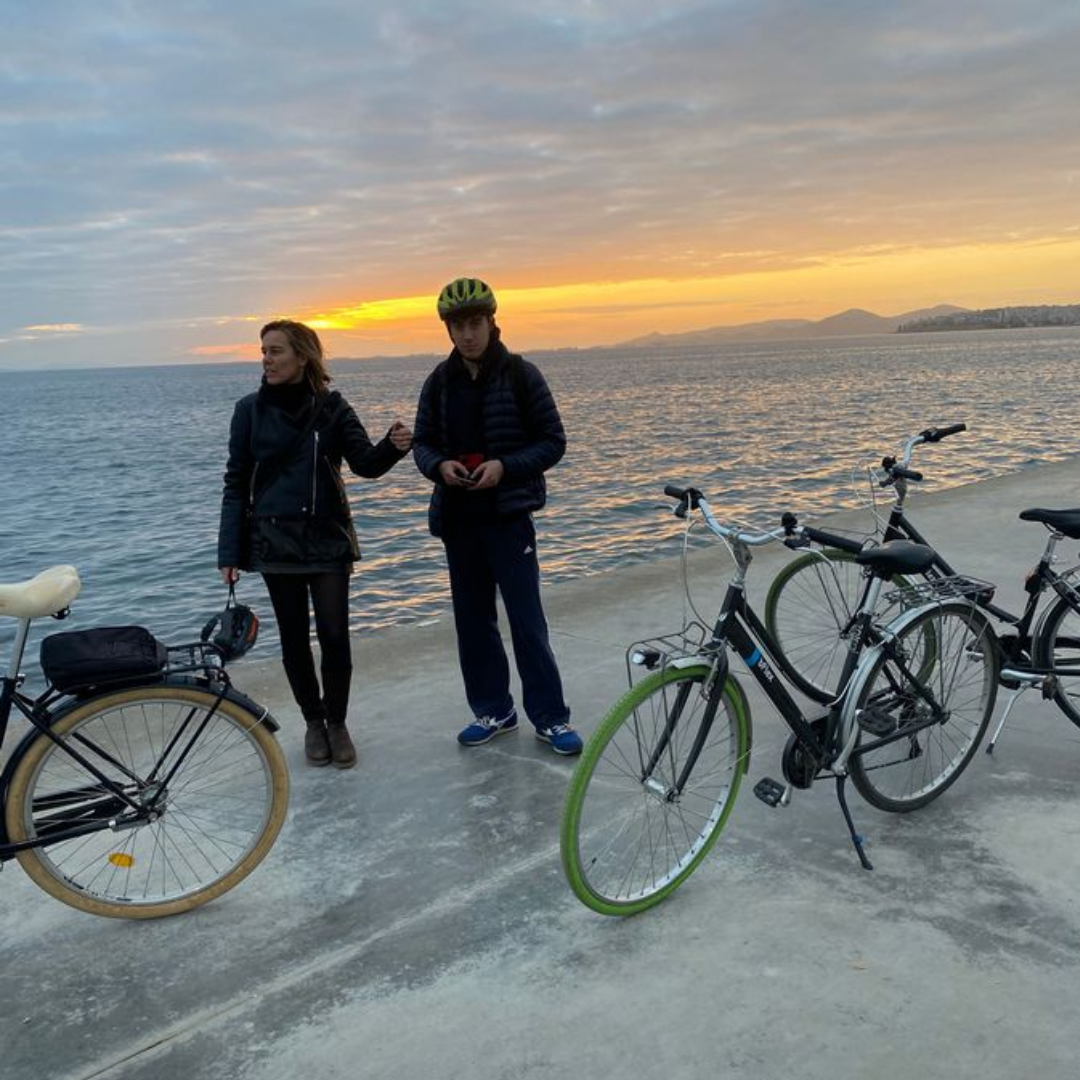
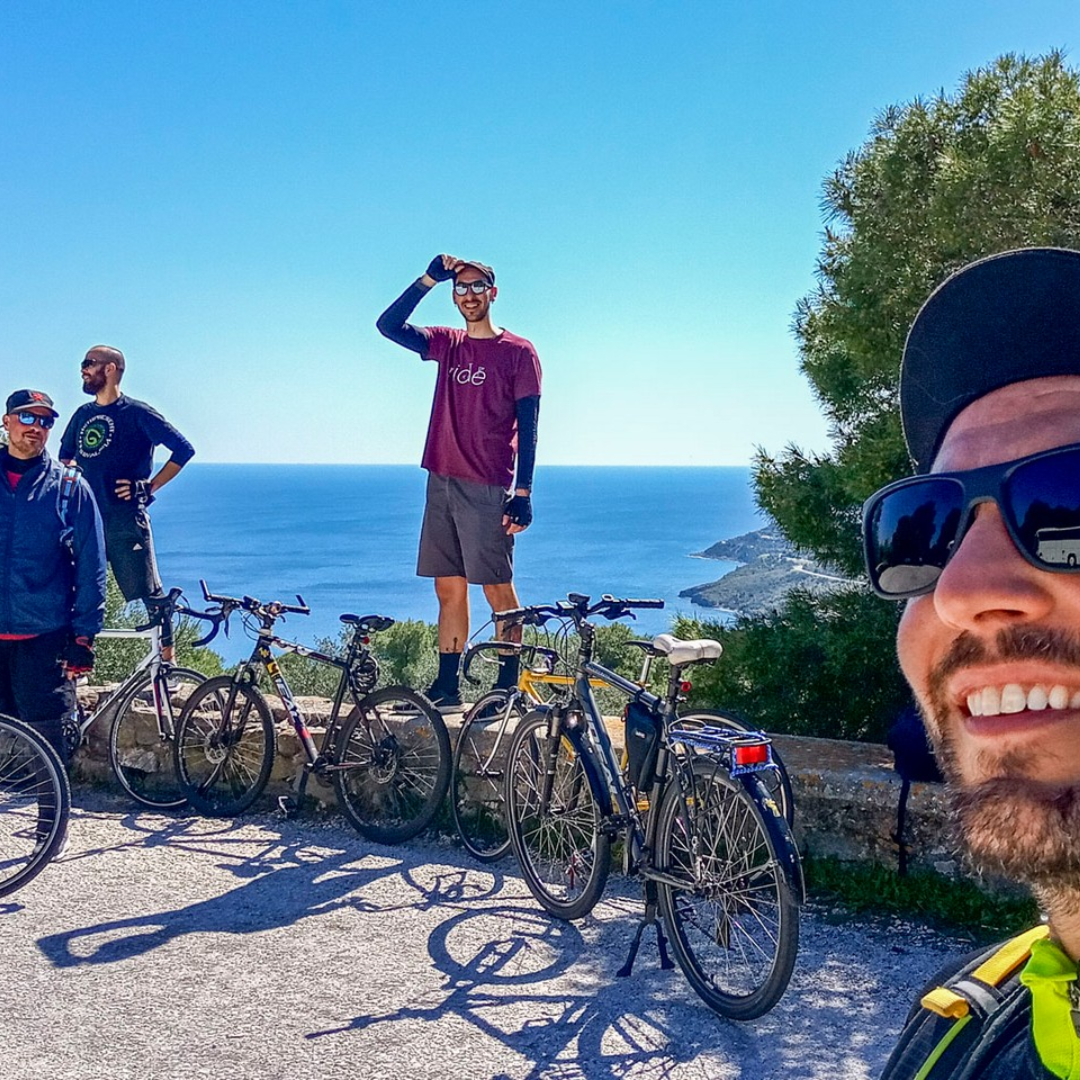
Magda, founder of SunCycling Athens, wanted to expand her cycling business into bike rentals without making a large investment before knowing whether there would be enough demand.
She started by leasing four city bikes through bFlex.
Instead of:
Buy 30 bikes → build a website → spend money on marketing → hope customers arrive
she could follow a much lower-risk approach:
Start with 4 bikes → get bookings → learn what customers want → expand the fleet
Today, SunCycling Athens operates approximately 30 bicycles and has grown into a full-time rental and bike-tour business.
Read the full story here:
How Magda Built SunCycling Athens from 4 to 30 Bikes
The lesson is simple: your starting fleet does not have to be your final fleet.
.png)
So How Many Bikes Should You Start With?
For many new independent bike rental businesses, 4–10 bikes can be enough to start testing the market.
Your ideal number depends on several factors:
- Your location
- Local tourism
- Seasonality
- Whether customers book hourly, daily or monthly
- The types of bicycles you offer
- Your available capital
- Storage space
- Competition
- Your ability to attract customers
- Whether you offer guided bike tours as well as rentals
A business near a busy beach resort might quickly need 20 or 30 bikes during summer.
A new operator in a smaller city may be much better off beginning with five bikes and expanding after demand has been proven.
There is no reason to buy 25 bikes simply because 25 is a common fleet size for an established operator.
Your Location Matters More Than Your Starting Fleet Size
Location can completely change the economics of a bike rental business.
Consider the difference between several types of businesses.
Tourist destinations
An operator on a Greek island, Italian coastal destination or popular holiday area may experience extremely strong demand during a relatively short period.
July and August could be very busy while November or January could be almost completely different.
Buying a huge fleet based on August demand can therefore leave you with expensive bikes sitting unused for much of the year.
Large cities
Cities such as Athens, Rome, Naples or Amsterdam can have a broader mix of customers.
You might serve:
- Tourists
- Students
- Commuters
- Digital nomads
- Hotel guests
- Corporate customers
- Long-term residents
That can create demand throughout more of the year.
Bike-tour businesses
If you primarily organize guided tours, your fleet requirements are different again.
A company running a tour for eight people needs enough suitable bicycles available at the same time.
Your fleet size therefore depends not only on how many customers you have during a month, but also on how many customers need bikes simultaneously.
Understand Seasonality Before Buying Your Fleet
Seasonality is one of the biggest mistakes new rental operators underestimate.
Imagine you start a rental company in April.
Bookings increase in May.
June is even stronger.
July is fantastic.
It can become tempting to assume that demand will continue growing throughout the year.
Then October arrives.
Tourist traffic declines and suddenly half your fleet is standing still.
This is why your first year should partly be treated as a learning period.
You want to understand:
- Which months generate the most bookings?
- Which days of the week are busiest?
- How far in advance do customers book?
- How long do they rent for?
- Which bike categories are most popular?
- How often do you sell out?
- Which bikes are rarely rented?
- Where are your customers coming from?
After a full 12 months, you have something extremely valuable:
your own demand data.
And that data is much more useful than somebody else's estimate of how many bikes your business should own.
What Is Bike Rental Fleet Utilization?
One of the most important numbers in a bike rental business is fleet utilization.
It tells you how much of your available fleet customers are actually using.
For example, imagine you have 10 bikes available for 30 days.
That gives you:
10 bikes × 30 days = 300 available bike-days.
If customers rent those bikes for a combined 120 days during that month, your utilization is:
120 ÷ 300 = 40% fleet utilization
You do not necessarily need 100% utilization.
In fact, constantly being completely sold out can mean you are losing bookings because customers cannot find an available bike.
But very low utilization can indicate that you have too much capital tied up in vehicles that are not generating revenue.
The objective is to find the right balance.
When Should You Add More Bikes?
One of the best signals is repeated lack of availability.
If customers regularly want to book a bicycle but your fleet is already reserved, you may have reached the point where additional bikes can generate additional revenue.
Look for patterns such as:
- Frequently selling out on weekends
- Multiple customers requesting unavailable bikes
- Certain categories constantly being booked
- Tours reaching maximum capacity
- Customers requesting longer rental periods
- Strong advance bookings for upcoming months
Do not expand because you feel busy.
Expand because your booking data shows that additional inventory has a realistic chance of being rented.
Not Every Bike in Your Fleet Should Be the Same
Another reason to start small is that you may not yet know which vehicles your customers actually want.
A rental business might eventually offer a combination of:
- City bikes
- Trekking bikes
- Electric bikes
- Mountain bikes
- Electric fat bikes
- Children's bikes
- Cargo bikes
- Electric scooters or motorbikes
Your ideal mix depends entirely on your market.
Tourists exploring a city may prefer comfortable city bikes or e-bikes.
Customers exploring hilly areas may specifically look for electric bikes.
Families may need children's bikes.
Adventure tourists may want mountain bikes.
Starting with a smaller mixed fleet allows you to discover where demand exists before ordering large quantities of one particular model.
What Should You Expect During the First 6 Months?
The first months of a bike rental business are usually not about maximizing profit.
They are about learning.
Months 1–2: Test the market
Start accepting bookings and see who your customers actually are.
You may discover that the people finding you are completely different from those you originally expected.
Pay attention to every enquiry.
When somebody asks for something you do not offer, record it.
Those unanswered requests can become useful information.
Months 3–4: Find your best-performing products
After several months you should start seeing patterns.
Maybe your e-bikes are constantly rented while your regular city bikes remain available.
Maybe daily rentals perform better than hourly rentals.
Maybe customers regularly ask for monthly rentals.
Maybe most bookings happen through hotels rather than Google.
This is when you can begin adjusting your fleet and marketing.
Months 5–6: Expand what works
Once you know where demand exists, you can start adding vehicles more confidently.
Instead of buying ten random bikes, you might discover that adding four more of your most popular e-bike model produces much better results.
The principle is simple:
Let demand determine your fleet.
What Should You Expect During Your First Year?
It is important to have realistic expectations.
Your first year can be slow.
A rental business needs more than bicycles.
Customers need to discover you.
They need to trust you.
Google needs time to discover your website.
You need reviews.
Hotels and tourism partners need to learn that you exist.
You may need relationships with:
- Hotels
- Hostels
- Airbnb hosts
- Tour operators
- Travel agencies
- Local businesses
- Tourism organizations
- Corporate customers
Your first season teaches you how the market works.
Your second season is often very different because you can start with existing reviews, customer data, partnerships and knowledge about which vehicles actually generate revenue.
That is why buying a huge fleet before your first season can be unnecessarily risky.
The Hidden Cost of Starting a Bike Rental Business
Buying the bikes is only one part of starting the business.
Traditionally, a new rental entrepreneur also needs to arrange:
- A website
- Online booking software
- Availability calendars
- Online payments
- Fleet management
- Customer communication
- Marketing
- Search engine optimization
- Financial reporting
- Maintenance processes
- Partnerships
- Advertising
You either need to learn how to do these things yourself or hire different developers, agencies and software providers.
That makes experimentation expensive.
This is one of the problems bFlex is designed to solve.
Start a Bike Rental Business Without Building Everything From Scratch
bFlex provides mobility entrepreneurs with infrastructure to start and grow their rental business.
As a bFlex vendor, you can access tools including:
- Online booking tools
- Availability calendars
- Fleet management
- Online payments
- Financial reporting
- A free micro-site
- Marketplace exposure
- Fleet sourcing
You can list bicycles for hourly, daily or monthly rental and can also combine rentals with bike tours, subscriptions and vehicle sales.
Instead of connecting five or six separate systems, your inventory and bookings can be managed from one platform.
Become a Vendor on bFlex
What If You Don't Want to Buy Your Entire Fleet?
This is another reason starting with a small fleet has become easier.
Through bFlex, vendors can access different ways of sourcing vehicles depending on availability.
Buy bikes at wholesale prices
Businesses can source bikes and other mobility vehicles through bFlex's B2B marketplace and access wholesale offers from suppliers.
This can be useful once you already know which vehicles you want to add permanently to your fleet.
Lease bikes by the month
You can also use monthly rental options for selected fleet vehicles.
Rather than purchasing the vehicle upfront, you rent it.
This can be particularly useful when you are testing a new market, preparing for a seasonal increase in demand or trying a new category of vehicle.
If you no longer need the vehicle, the rental can be stopped according to the applicable rental terms.
Buy your fleet in instalments
Selected fleet vehicles can also be acquired using instalment or financing options.
That means an entrepreneur does not necessarily need the cash to purchase an entire fleet upfront.
Availability and terms depend on the individual vehicle and financing option.
A Better Way to Think About Your First Fleet
Instead of asking:
"How many bikes do I need to build a proper rental company?"
Ask:
"What is the smallest fleet that lets me properly test demand?"
For some entrepreneurs, that might be four bicycles.
For another business, it could be eight e-bikes.
For a tour operator expecting groups of ten people, it could be twelve or fifteen bikes.
There is no universal number.
But there is a universal principle:
Do not build your fleet based purely on predictions. Build it based on customers.